

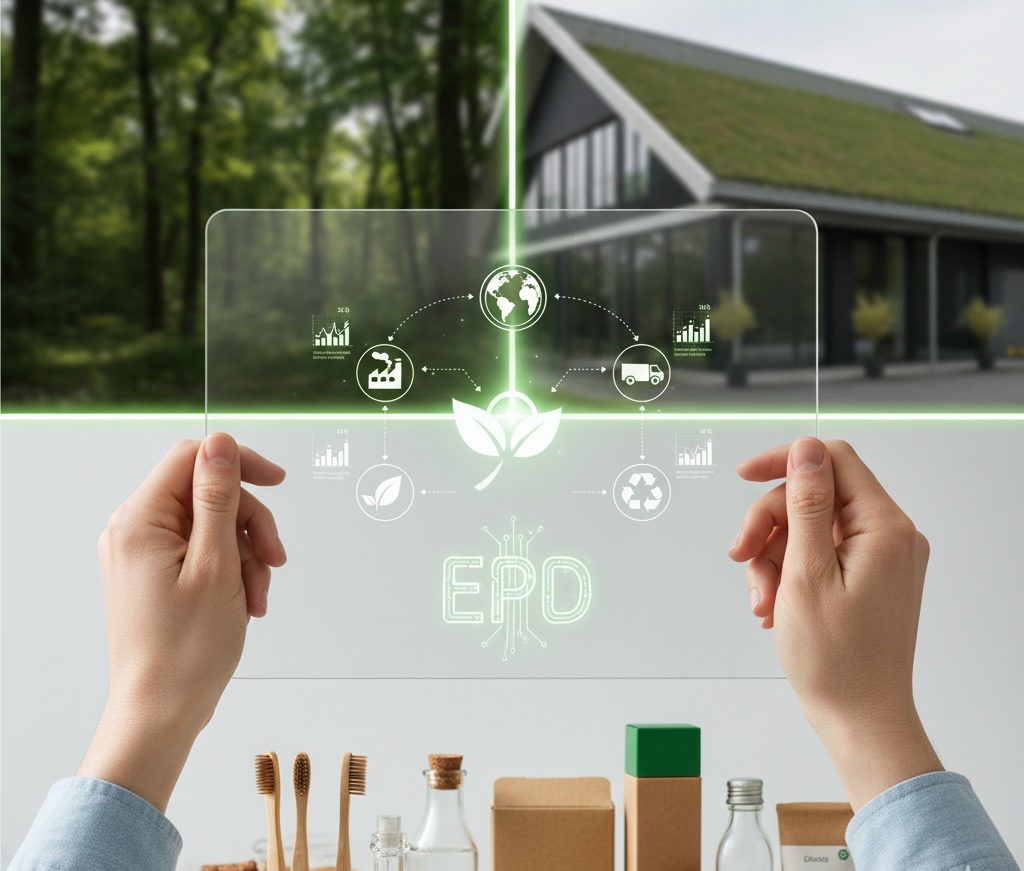
Environmental Product Declarations (EPD)
An Environmental Product Declaration (EPD) is a transparent and verifiable document that summarizes the environmental impacts of a product or service throughout its entire life cycle, in accordance with internationally recognized standards.
Core Function and Purpose
EPDs present environmental data generated from the production stage to the use and final disposal of a product in a standardized format.
International Standards: EPDs are generally prepared in compliance with international standards such as ISO 14025 (Type III Environmental Declarations) and EN 15804 (Sustainability of Construction Works - Core Rules for the Product Category of Construction Products).
Life Cycle Assessment (LCA): The foundation of an EPD is a Life Cycle Assessment (LCA) study, which objectively measures the environmental impacts of the product.
Independent Verification: To ensure credibility, the preparation processes and content of these declarations are audited and approved by an independent third party.
The Aluminum Sector and EPDs
The primary reason the aluminum sector develops EPDs is to reliably communicate environmental data to the construction industry.
Regional EPDs: Since aluminum production and the energy sources used can vary by region, the industry creates regional EPDs (e.g., separate for Europe, North America, or Türkiye). This provides data that more accurately reflects the production conditions and impacts of each specific region.
Impact on the Construction Sector: For aluminum products used in construction (facade systems, windows, etc.), EPDs allow architects and engineers to evaluate and calculate the overall environmental performance of buildings within green building certification systems such as LEED or BREEAM.
Reliability and Transparency: These EPDs offer a credible and transparent data source that allows aluminum to be compared environmentally with other building materials. Consequently, "eco-friendly" claims are supported by concrete data.
Carbon Footprint and Energy Efficiency Targets: Towards a Sustainable Future
In the fight against global climate change, two critical concepts for businesses, governments, and individuals are carbon footprint and energy efficiency. These two elements are directly interrelated and mutually supportive in achieving sustainability goals.
What is a Carbon Footprint?
A carbon footprint refers to the total amount of all greenhouse gases (CO2, CH4, N2O, etc.) caused directly or indirectly by an activity, product, or individual, expressed in terms of carbon dioxide equivalent (CO2e).
Measurement and Responsibility: Measuring the footprint is the first step for an organization or country to quantitatively understand its environmental impact and be held accountable.
Primary Sources: The combustion of fossil fuels for energy production, transportation, industrial processes, and land-use changes are the main sources of carbon footprints.
Energy Efficiency and Its Relationship
Energy efficiency means providing the same service or output (e.g., lighting, heating, or production) using less energy. It is one of the most effective and fastest ways to reduce a carbon footprint.
Goals and Strategies
Emission Reduction: Increasing energy efficiency means power plants burn less fuel, leading directly to reduced carbon emissions. Energy efficiency investments are generally considered the most cost-effective climate change mitigation strategies.
Cost-Effectiveness: Energy efficiency projects provide economic benefits by lowering the energy bills of businesses and households. This makes sustainability goals financially attractive.
Integration with Renewable Energy: Lower energy demand resulting from efficiency increases the capacity of renewable energy sources (solar, wind) to meet total needs and reduces pressure on the grid.
Goal Setting and Commitment
Organizations typically adopt two main approaches when setting environmental targets:
Science-Based Targets (SBTi): Sets targets aligned with the emission reductions necessary to keep global temperature rise below the 1.5°C or 2°C limits set by the Paris Agreement.
Net-Zero Commitments: Aims to reach zero net emissions by a set date (usually 2050) by balancing the amount of greenhouse gases released into the atmosphere with the amount removed.
Conclusion
While measuring the carbon footprint defines an organization's environmental impact, energy efficiency targets represent the most concrete and cost-effective steps to reduce that footprint. Managing these two headers simultaneously is not only an environmental necessity but also critical for operational resilience and long-term competitiveness.