

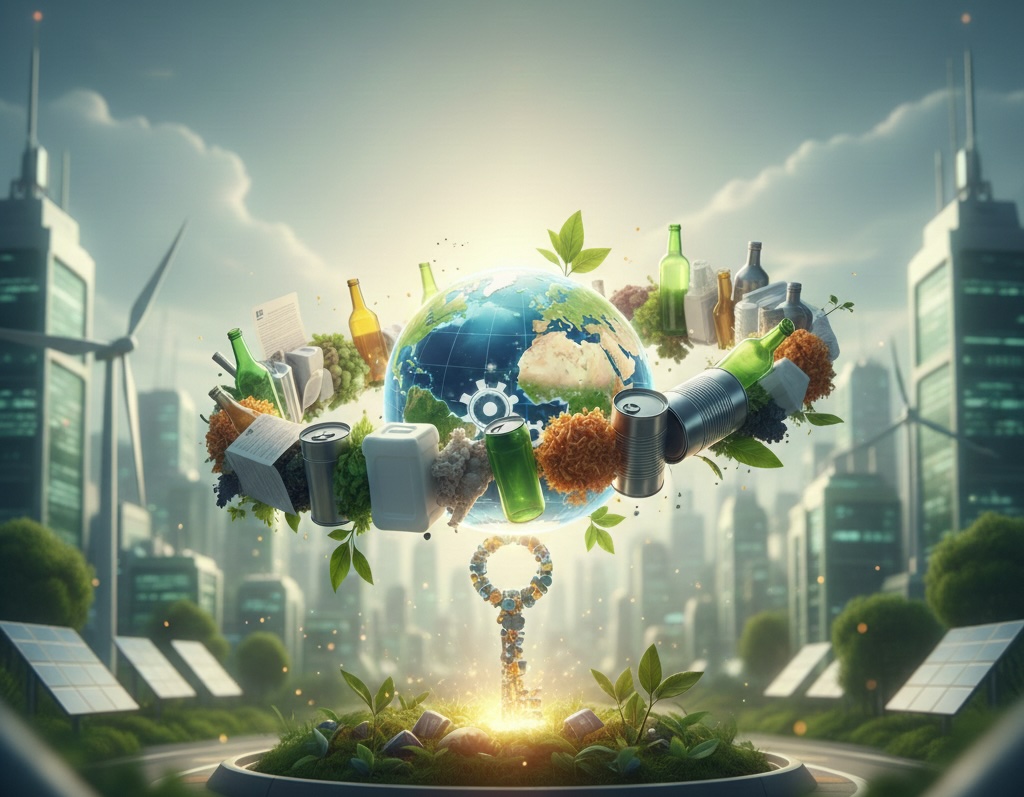
Recycling and the Material Cycle: The Key to a Sustainable Future
In today’s world, limited natural resources and rising consumption compel us to rethink the concept of "waste." Recycling is more than just sorting trash; it is a strategic material cycle management that extends the lifespan of materials and alleviates the environmental burden.
What is a Material Cycle?
A material cycle is the journey a product takes from raw material extraction to production, through its use and disposal, and finally back to becoming a raw material once again. Unlike the traditional "Take-Make-Waste" (Linear Economy) model, the material cycle adopts the principles of the Circular Economy. In this system, waste is not an end, but a new beginning.
This cycle primarily consists of the following stages:
Resource Extraction: Obtaining natural raw materials (the goal is to minimize this).
Production and Distribution: Processing products and delivering them to the consumer.
Consumption: The use of the product by the end-user.
Recovery (Recycling): Collecting, sorting, and reprocessing waste.
The Critical Role of Recycling
Recycling is the most vital link in the material cycle. This process varies depending on the properties of the materials:
Metals: Metals like aluminum and steel can be recycled infinitely without losing their properties. This drastically reduces mining activities and energy consumption.
Glass: A 100% recyclable material. It does not compromise on quality when remelted and reshaped.
Paper: Although fibers shorten with each recycling round, using recycled paper protects forests and reduces water consumption.
Plastics: Sorted by type (PET, HDPE, etc.) and converted into granules, they are reintroduced into the system as textiles, packaging, or construction materials.
Why is it Important?
The healthy functioning of this cycle provides critical environmental and economic benefits:
Energy Savings: Using recycled materials requires significantly less energy than producing raw materials from scratch. For example, using recycled aluminum saves 95% more energy compared to primary production.
Conservation of Natural Resources: Pressure on forests, water resources, and mineral reserves is reduced.
Reduction of Carbon Footprint: Lower energy consumption and reduced reliance on landfills decrease greenhouse gas emissions.
Economic Contribution: The waste management and recycling sector creates new jobs and reduces raw material imports.
Conclusion
Recycling and the material cycle represent a way of life that respects planetary boundaries. Completing this cycle is the responsibility not only of industrial facilities but also of individuals who correctly sort their waste at the source. We must remember: in nature, there is no such thing as waste—only resources that have not yet reached the right place.